The Problem With Averages
A standard cabinet is designed for an average space that rarely exists. Too tall for one room, too short for the next, and never quite matching the awkward corner or the sloped ceiling. Custom manufacturing removes that compromise entirely — and for importers, it also removes a competitive problem, because a catalogue is something any competitor can buy.
What Flexible Production Actually Allows
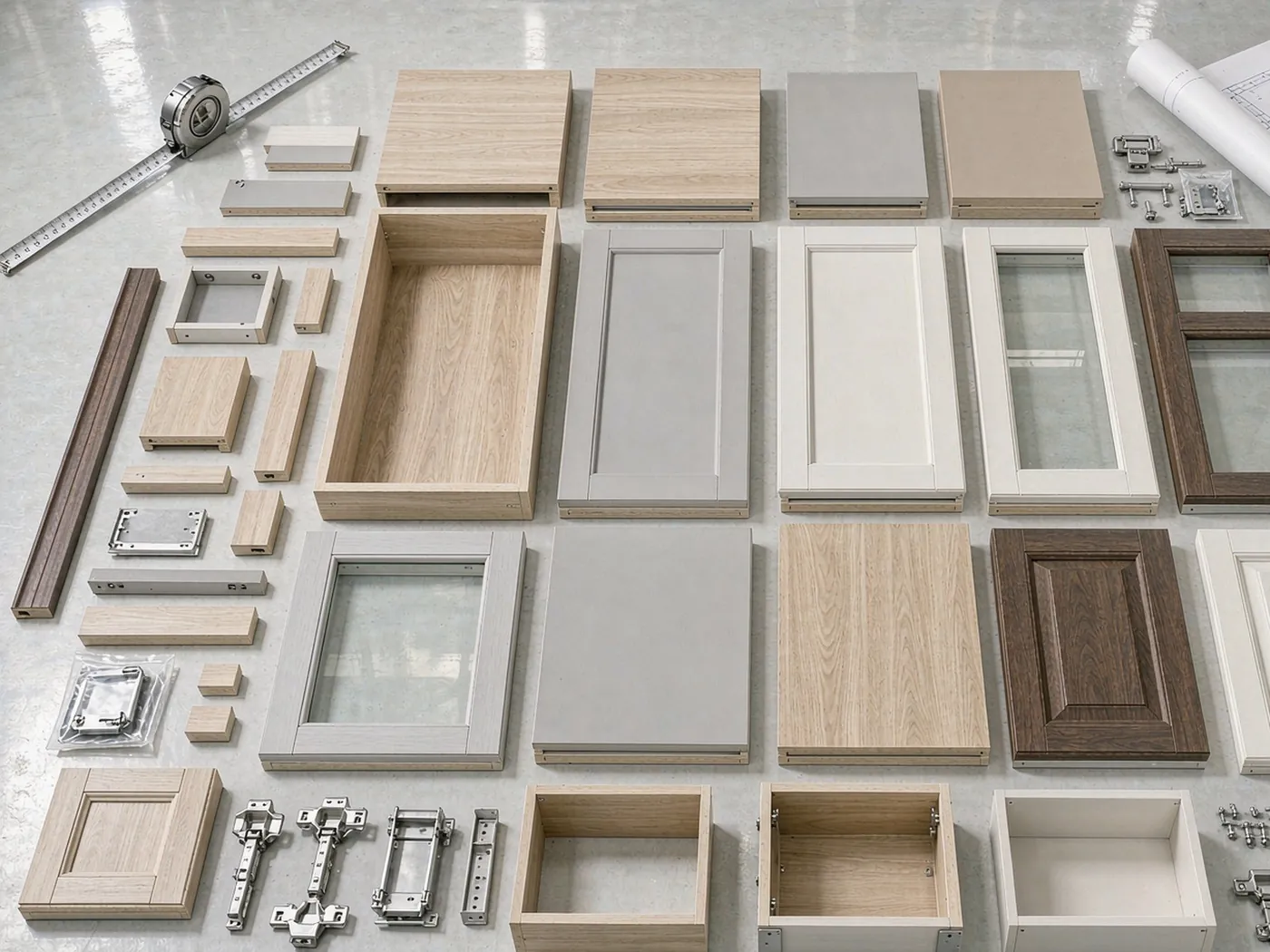
Working with a custom manufacturer rather than a catalogue seller means the product changes to suit the brief:
- Dimensions adjusted to the exact space, to the millimetre
- Layouts rearranged — drawer stacks, hanging heights, shelf counts
- Materials chosen per component, not per product line
- Finishes matched to your palette or an existing interior
- Details added or removed — handles, glass, lighting, curved fronts
Why It Wins Commercially
- Better fit means fewer returns and higher customer satisfaction.
- Differentiation — your range does not look like everyone else's catalogue.
- Scalable tiers — the same design can be produced at different material grades for different price points.
- Project adaptability — one factory can serve many different space requirements.
- Lower inventory risk — you order what sells, in the sizes that sell.
The Trade-Off, Stated Honestly
Custom work needs clear specifications and a slightly longer front-end conversation than clicking a product on a catalogue page. Lead times start from confirmation rather than from stock, and a factory sample is usually worth waiting for. In return you get a product built for the actual space. For most serious buyers, that is the trade worth making.
How to Brief a Custom Manufacturer Well
- Give real dimensions, not approximations.
- State how each unit will be used and loaded.
- Send reference images for style, and be specific about what you like in them.
- Name your target price band and destination market early.
- Flag any regulatory, size or packaging constraints up front.
Start With Your Space
Send the dimensions or drawings and describe how the unit will be used. We will come back with a layout and a costed proposal built around your requirements, not ours.
Frequently Asked Questions
Is custom furniture more expensive than catalogue?
The unit price is usually higher, but not always the cost per usable storage litre — fitted units waste less space and generate fewer returns.
How much longer does custom take?
Lead time starts from specification confirmation rather than from stock. For many importers, the difference is repaid by better fit and lower claim rates.
Can I start with a small trial order?
Yes. A sample unit or a small first order is a sensible way to evaluate workmanship before scaling up.